
Transit
Transit is a documentary photography project that explores everyday life in the West Bank through the stories of people who continue to drive vintage Mercedes models from the 1960s to the 1980s. Durable, repairable, and often inherited, these cars mirror the persistence of their owners — individuals who adapt, reroute, and keep moving despite an increasingly fragmented territory.
The project uses the car as a narrative lens rather than a subject in itself. Inside and around these vehicles, daily routines unfold: commuting to work, visiting family, delivering goods, or simply waiting. The cabin becomes an intimate space where smartphones, prayer beads, navigation apps, and personal objects coexist — tools for navigating uncertainty when official maps no longer reflect reality.
Recent data from UN OCHA shows a sharp rise in fixed checkpoints, gates, and road barriers across the West Bank, intensifying delays and reshaping mobility. Drivers rely on messaging apps and informal networks to anticipate closures and clashes, constantly recalculating routes that may change within hours. What emerges is a geography of delay, where time is stretched, compressed, or lost entirely.
Against this backdrop, the old Mercedes carries the memory of freer movement. Some owners restore these cars as acts of preservation; others keep them running out of necessity. Scarred bodies, worn interiors, and high mileage tell stories of repetition, resilience, and adaptation — vehicles repaired again and again, much like the lives they support.
Through portraits, details, and landscapes, Transit reflects on how mobility shapes identity, memory, and belonging. The project traces journeys taken, delayed, or abandoned, revealing how time itself travels through a controlled landscape. Each car moves slowly forward, carrying not just passengers, but the weight of routes that persist despite everything.
In the West Bank, distance is rarely measured in kilometers. It is measured in waiting.
Checkpoints, roadblocks, parallel road systems and sudden closures turn short journeys into hours. Movement — once ordinary — has become unpredictable, negotiated day by day. Within this landscape, an aging Mercedes-Benz is more than a vehicle: it is a tool for endurance, a container of memory, and a witness to lives lived in suspension.
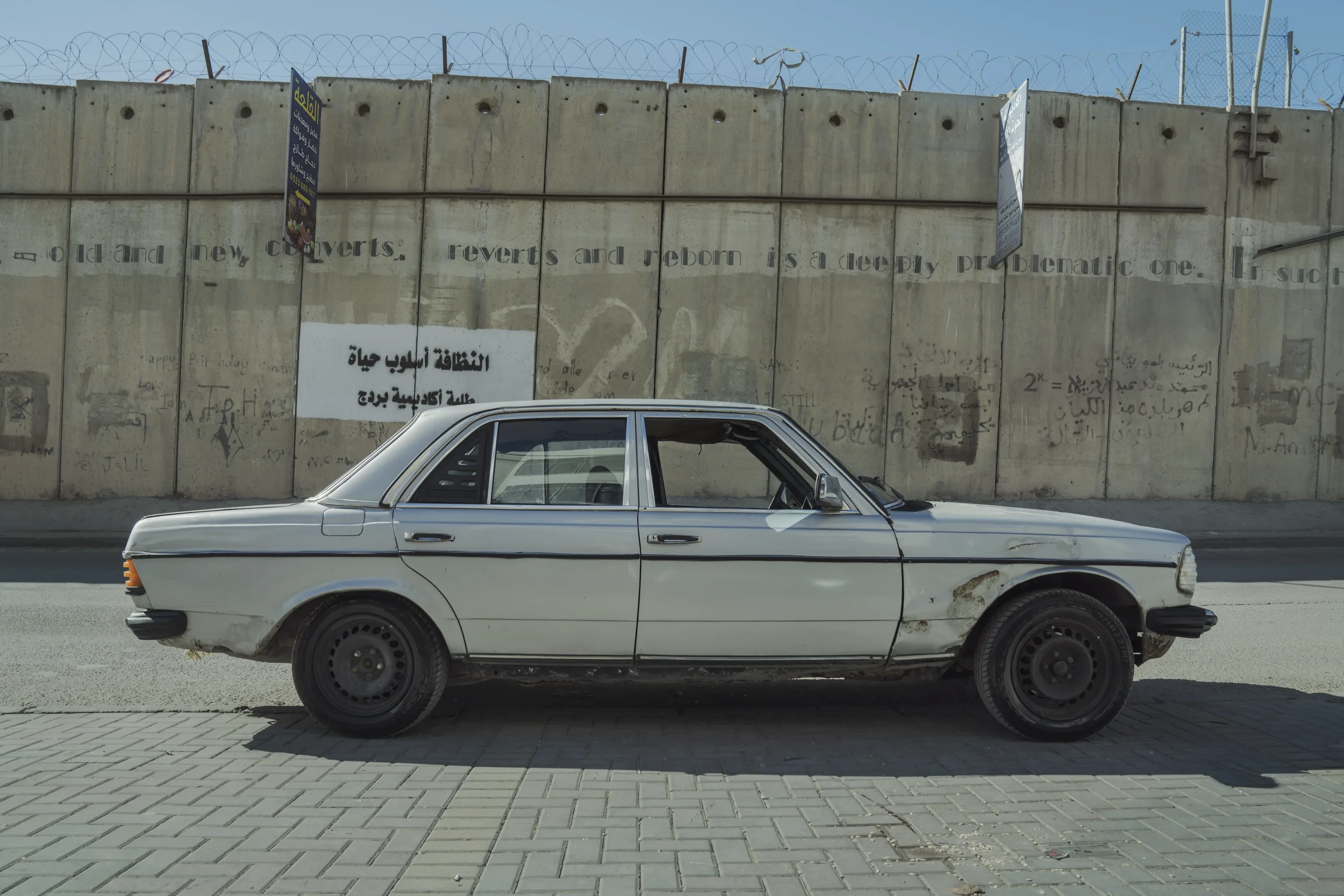
Khamis’s Mercedes stands by the separation wall near the Qalandiya checkpoint, where travel time is measured in queues and unpredictable stops. Qalandia Village - November 2025
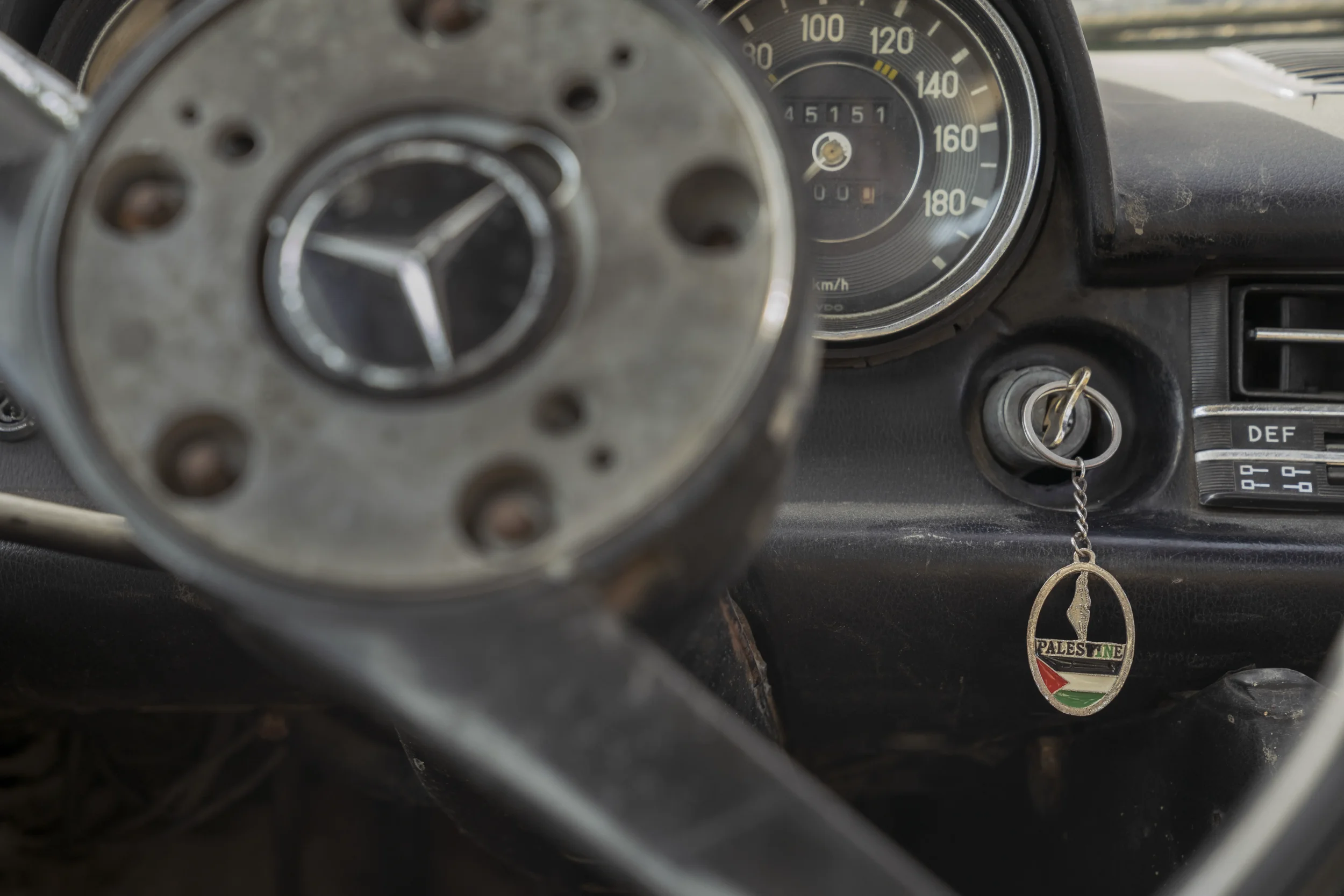
In Beit Furik, the car of Qassam, a young lawyer, shows a worn steering wheel and a key with the Palestinian flag — family memory and identity embedded in the everyday act of driving. Beit Furik - December 2025
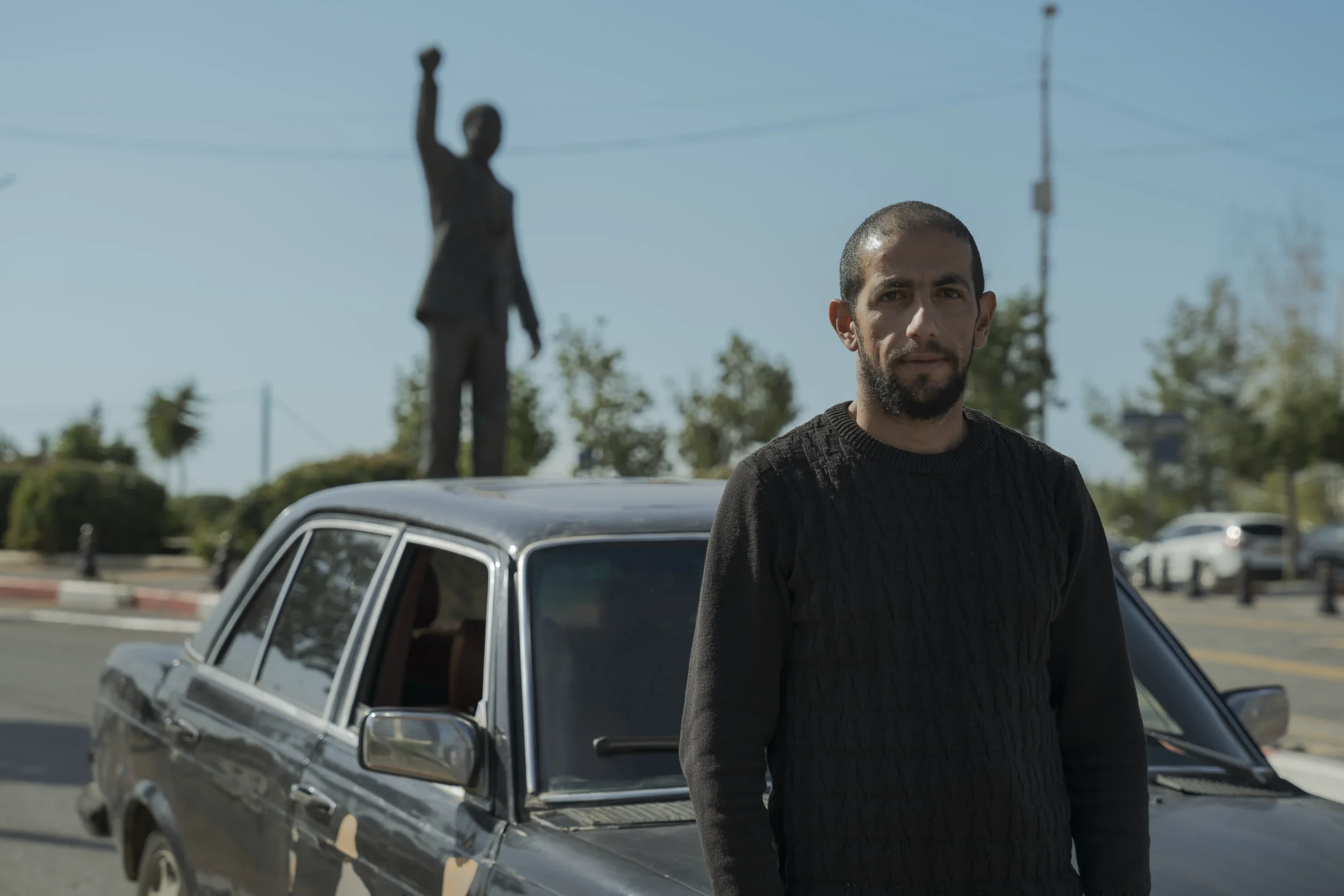
Khalil, a driver from Ramallah, stands beside his car in Nelson Mandela Square. The statue behind him evokes a global legacy of struggles that many Palestinians see reflected in their own restricted mobility. Ramallah - November 2025
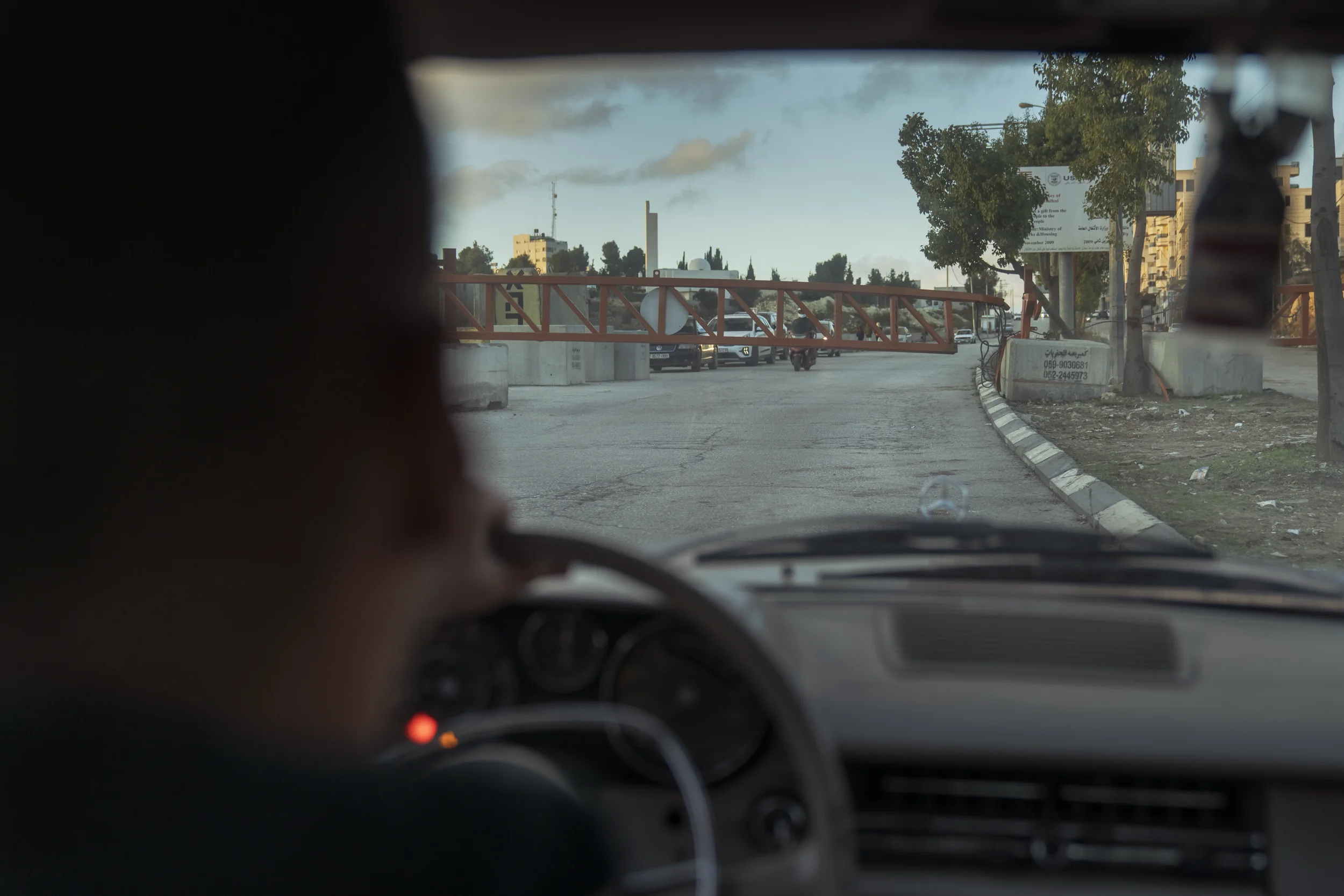
Yazam drives through Hebron. Ahead, a closed gate marks a daily reality in which the right to move is limited and unpredictable. Hebron - November 2025
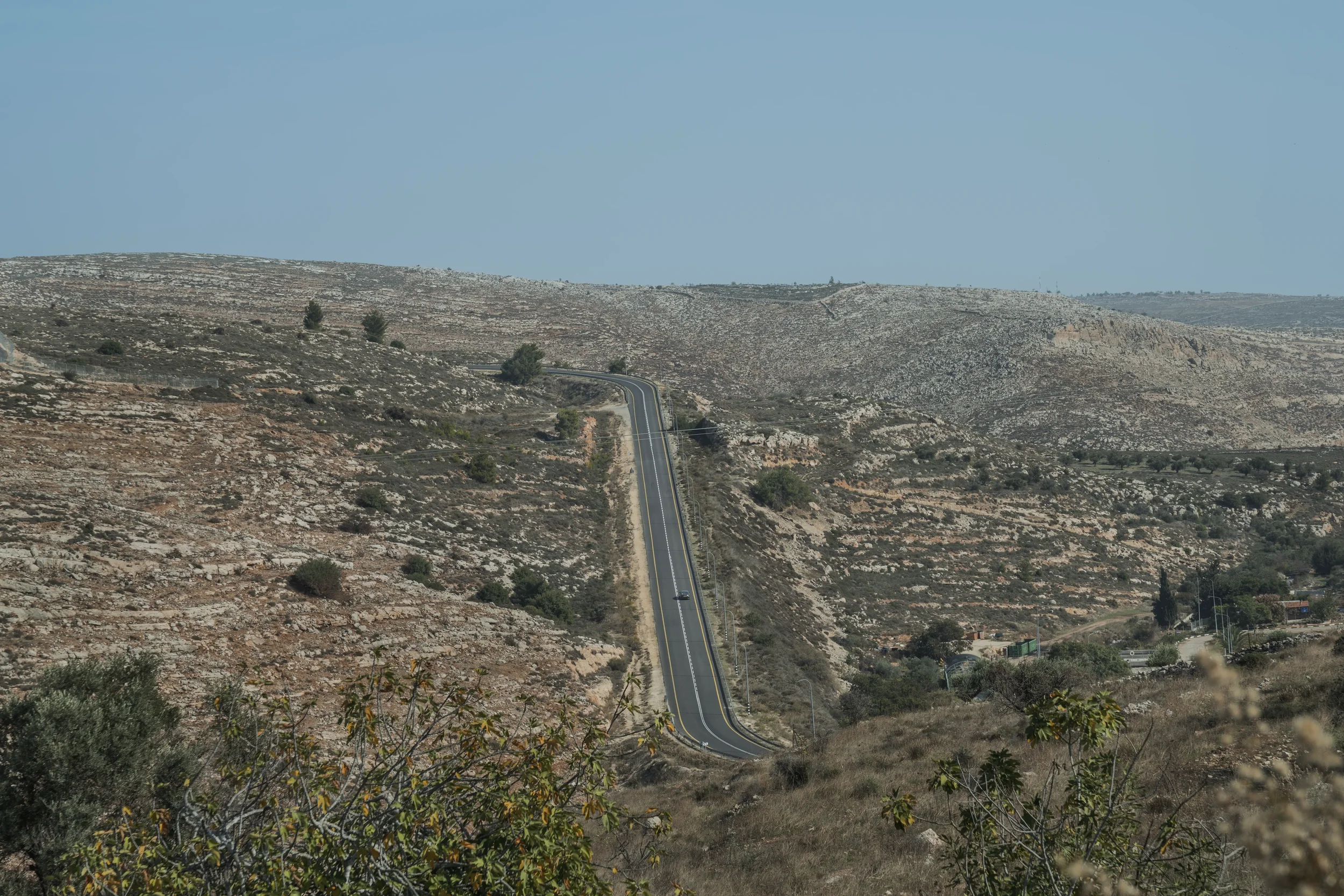
The hills around Ramallah are cut by a settler-only road, forcing Palestinians onto longer, fragmented routes that turn short distances into hours. Ramallah - November 2025
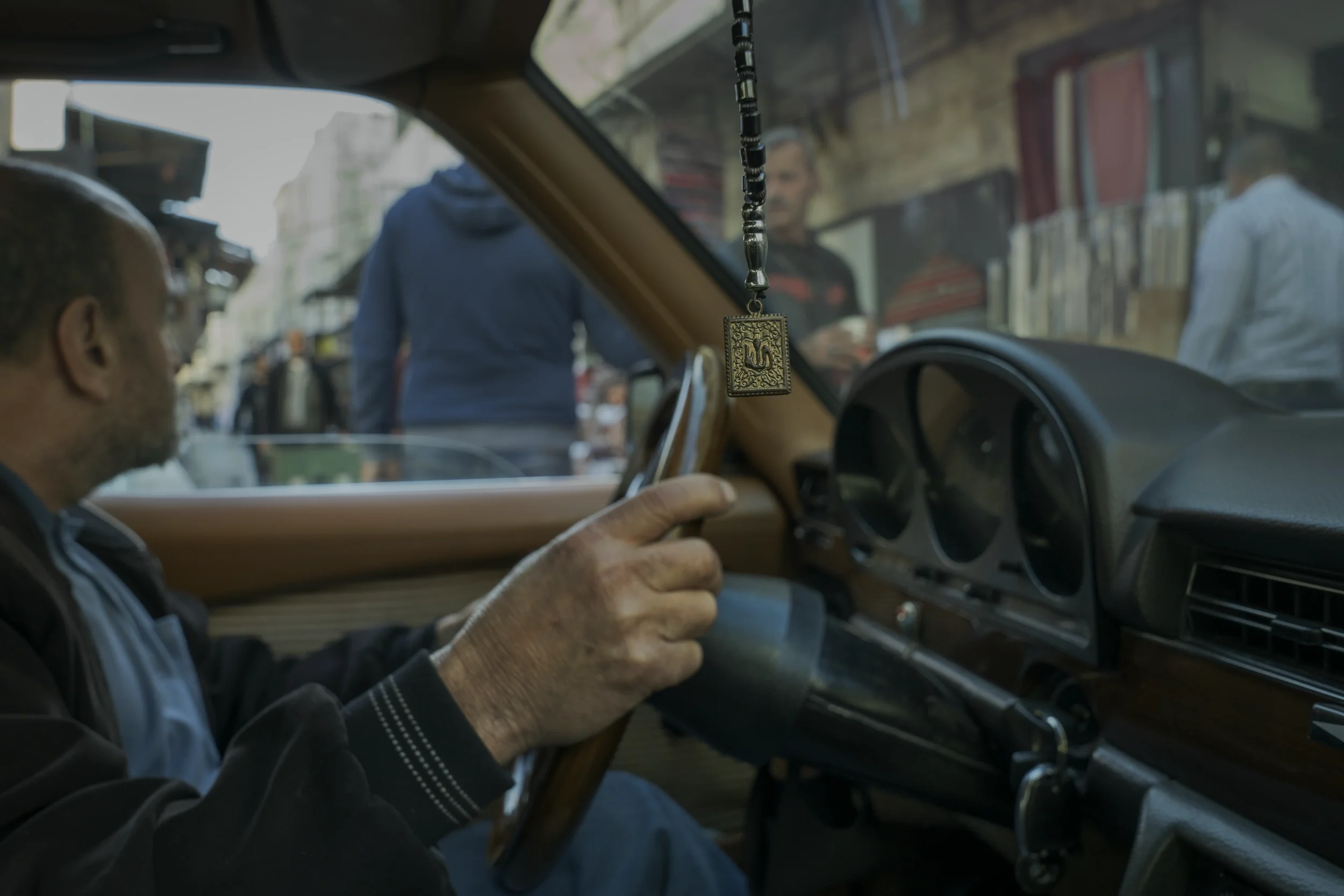
Hamza’s car in Nablus carries a sacred object hanging from the mirror — a blend of faith, road safety, and the constant awareness of sudden closures. Nablus - December 2025
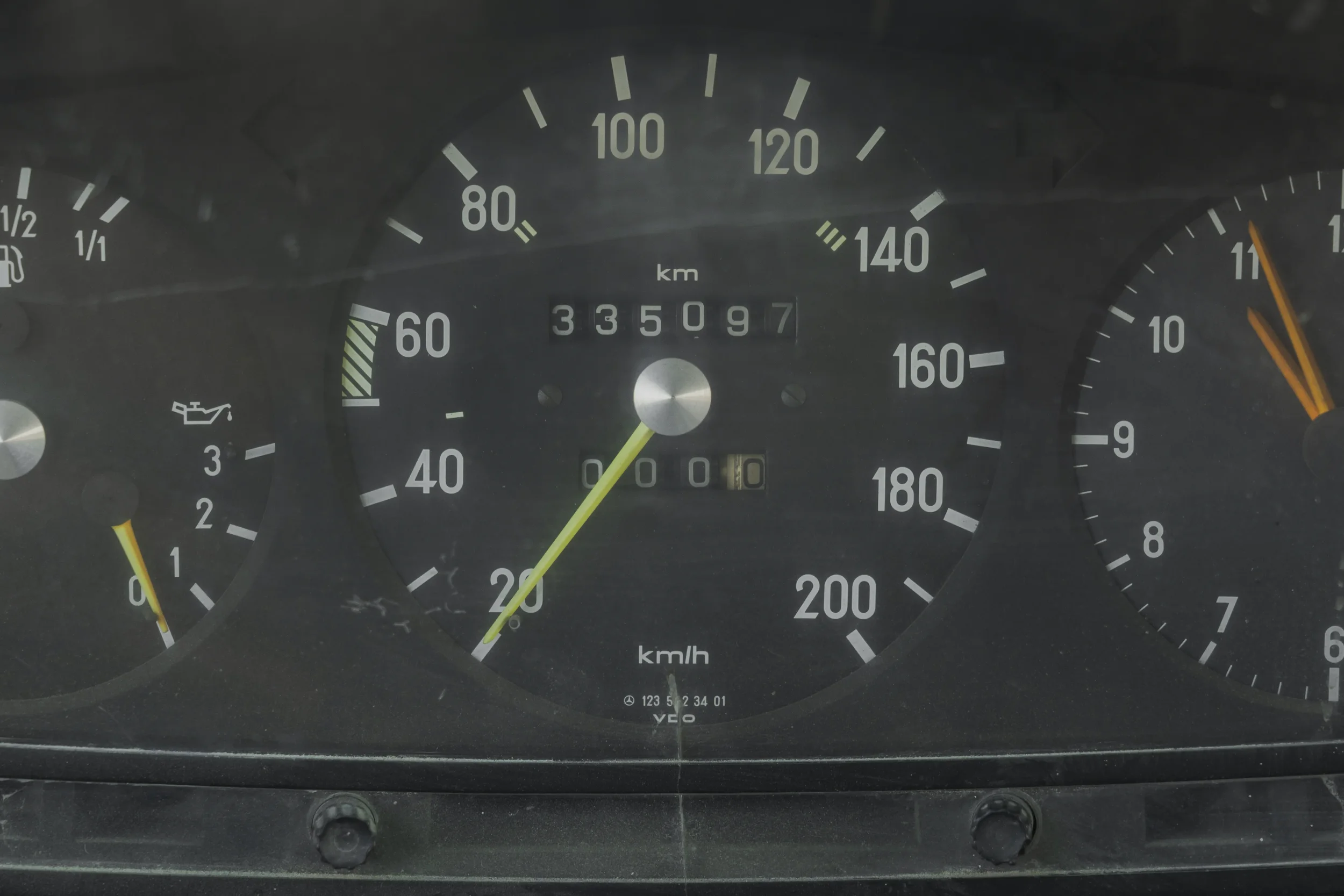
Khalil’s Mercedes reads 335,000 kilometers. A lifetime of repeated routes, now slowed by hundreds of checkpoints and gates that fracture official maps. Ramallah - November 2025
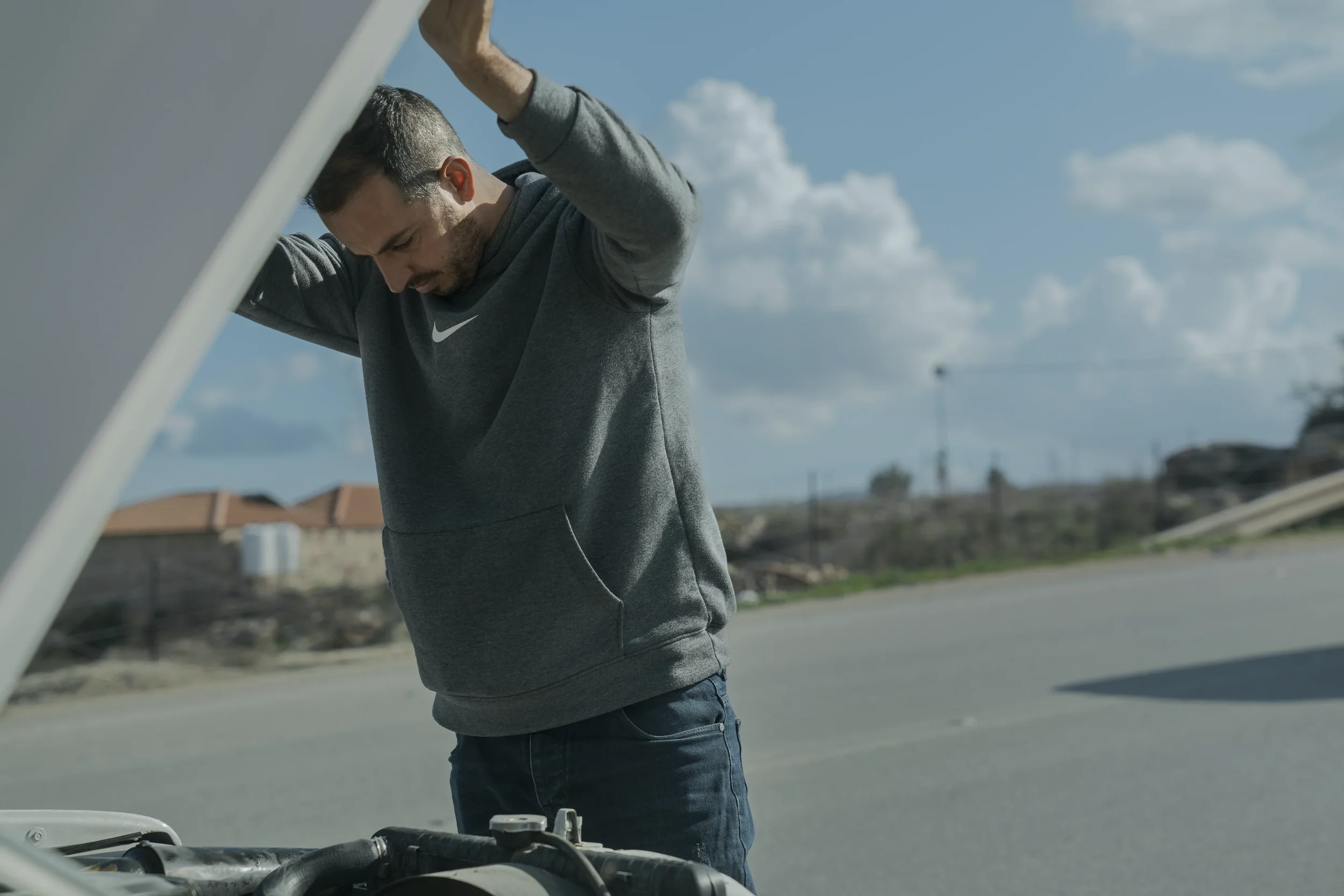
Osaid checks the engine of his Mercedes after radiator trouble forced him to stop mid-journey. A brief repair at a local mechanic was enough for the car to continue, a routine interruption along already uncertain routes. Jenin - November 2025
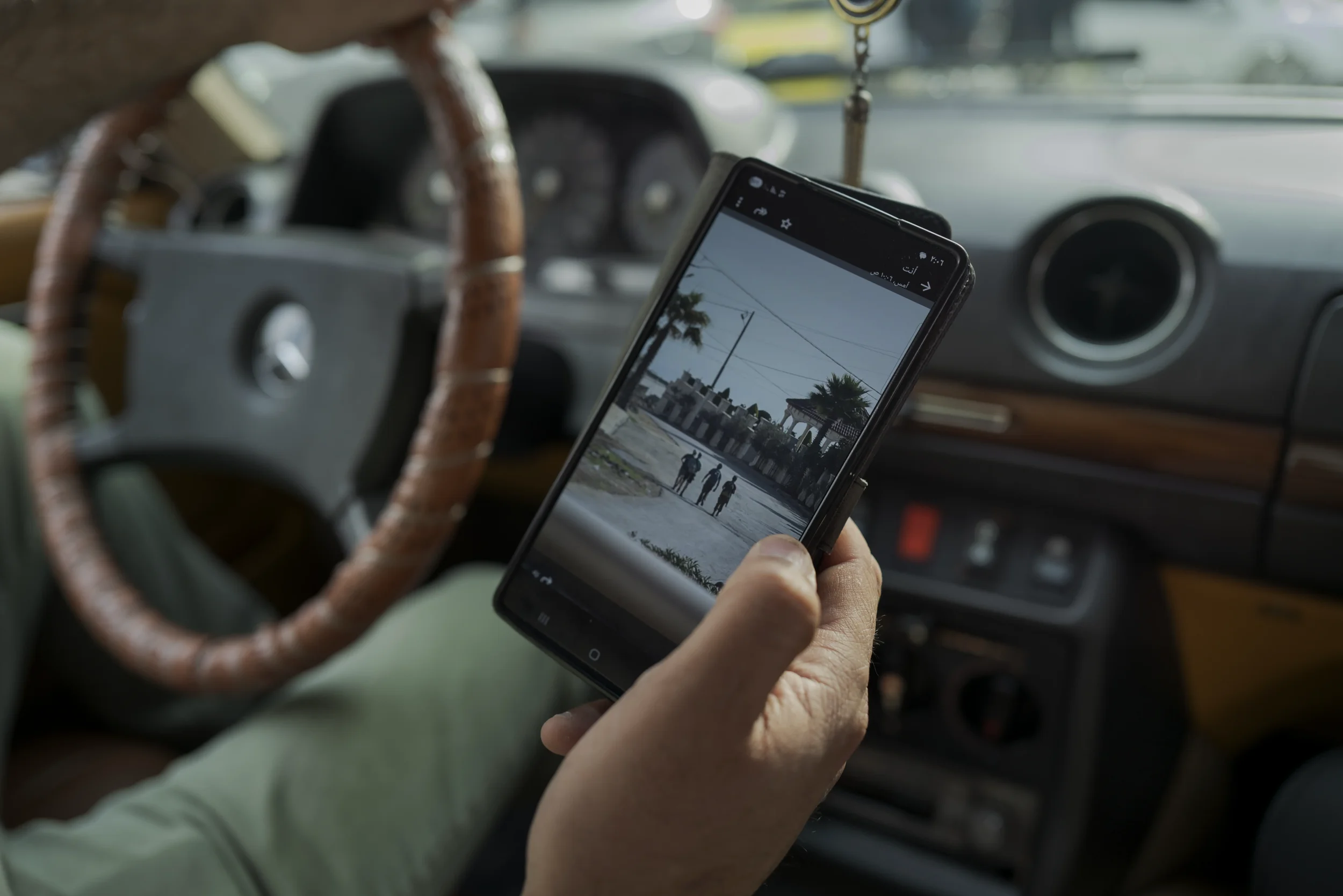
Khaldon watches a video on his phone showing an attack on his village. Messaging apps have become essential tools for determining when and how it is safe to move. Ramallah - November 2025
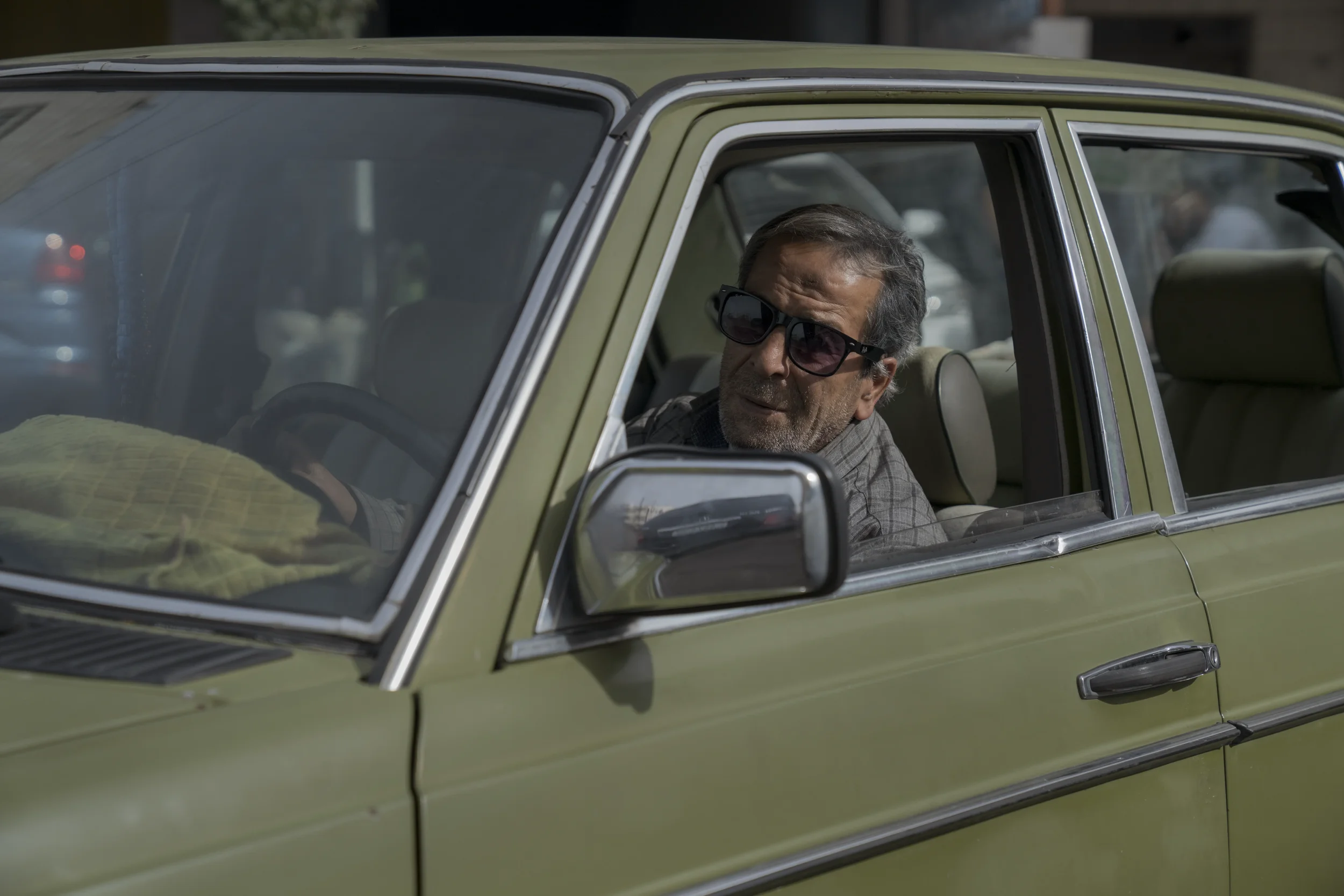
Jamal, 67, a mechanic specialized in vintage Mercedes models, drives through the streets of Ramallah. For decades, he repaired these cars for taxi drivers and commuters; today, he prefers to limit his movements to avoid hours lost at checkpoints. Ramallah - November 2025
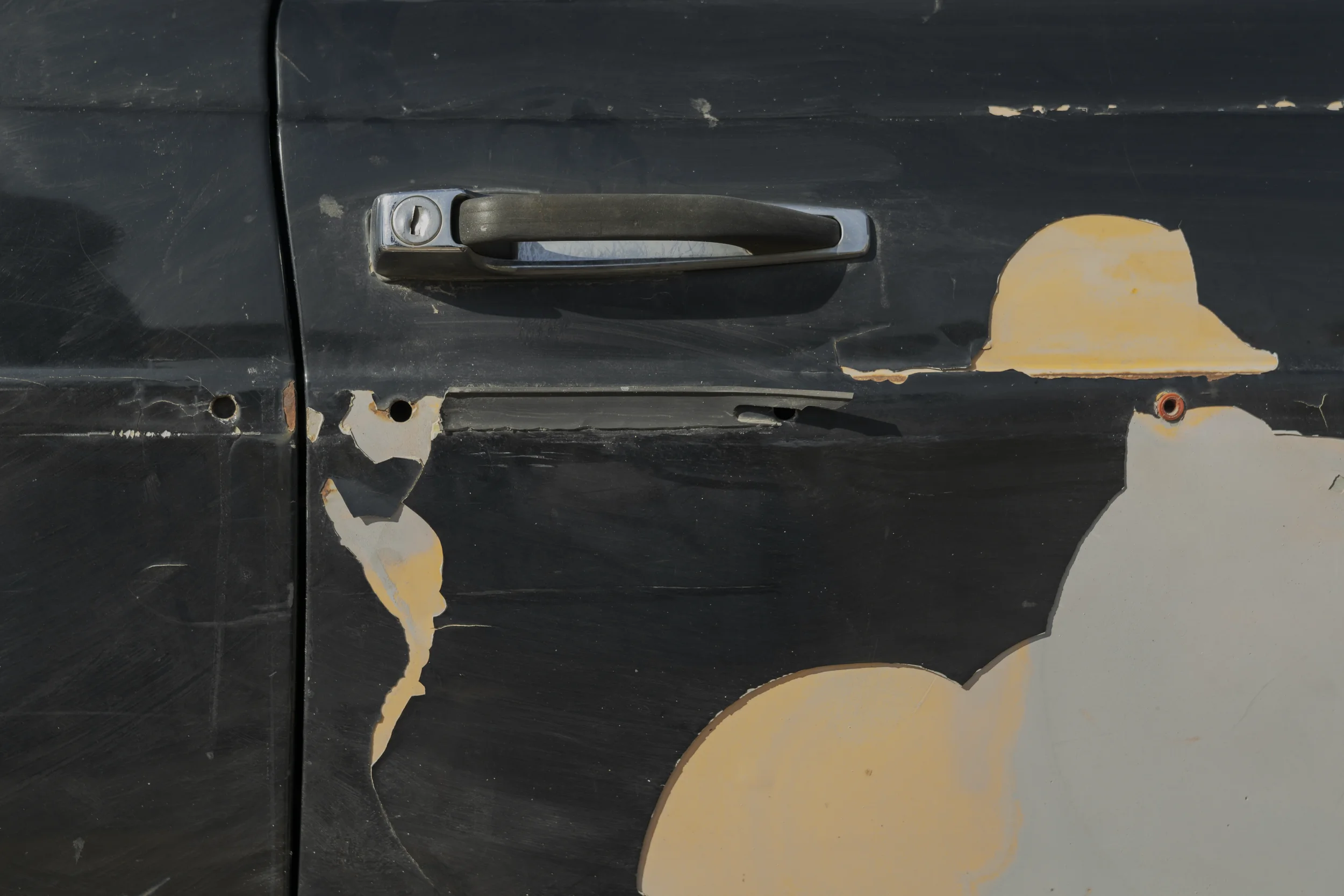
The black door of the Mercedes bears deep scratches and peeling paint. The worn handle becomes a quiet record of repeated journeys, repairs and hands that keep opening the way forward. Ramallah - November 2025
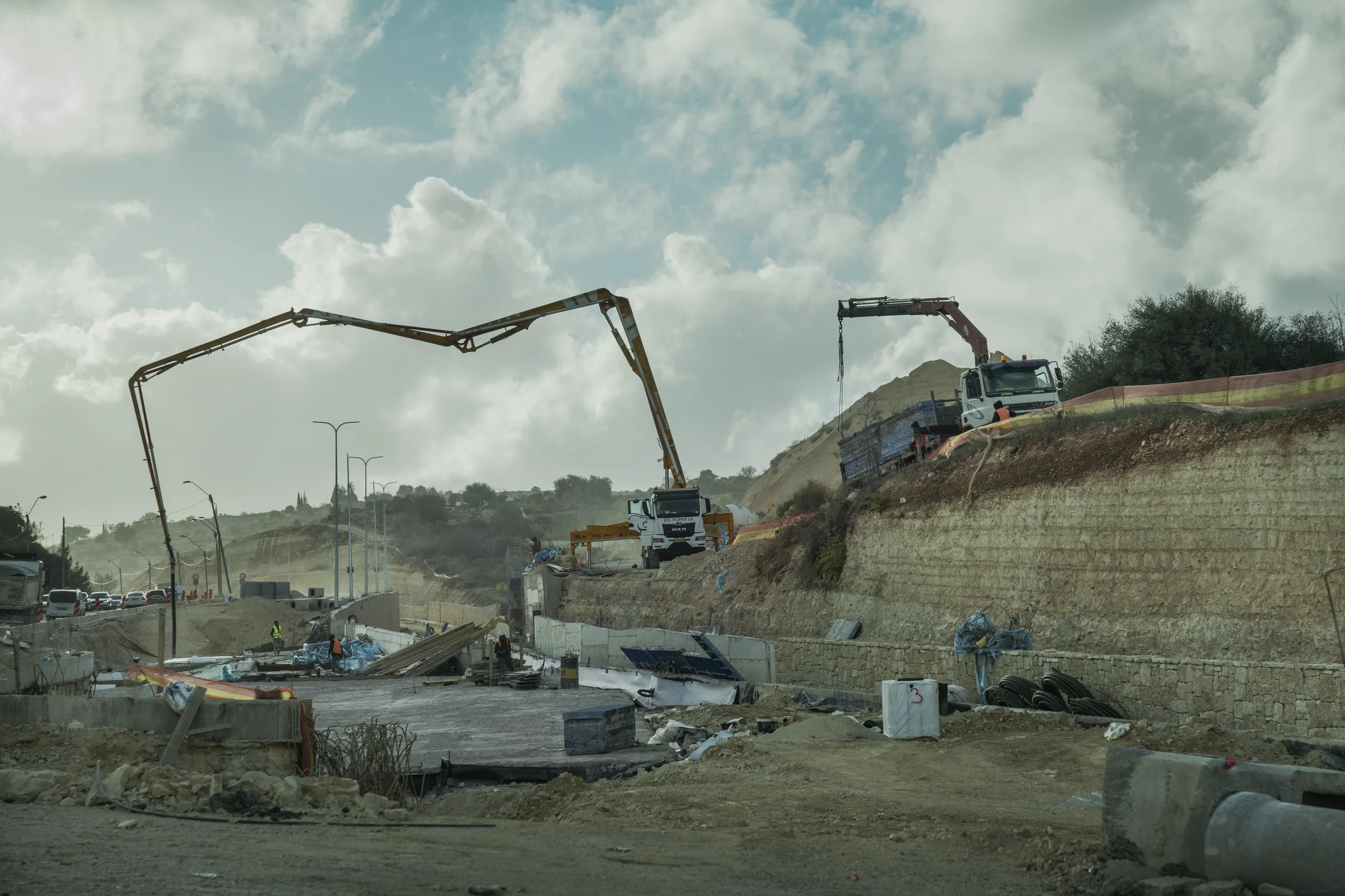
Construction work on a new road between Ramallah and Hebron. Excavators and barriers outline an infrastructure still in question, which residents fear may serve settlements more than Palestinian towns. West Bank - November 2025
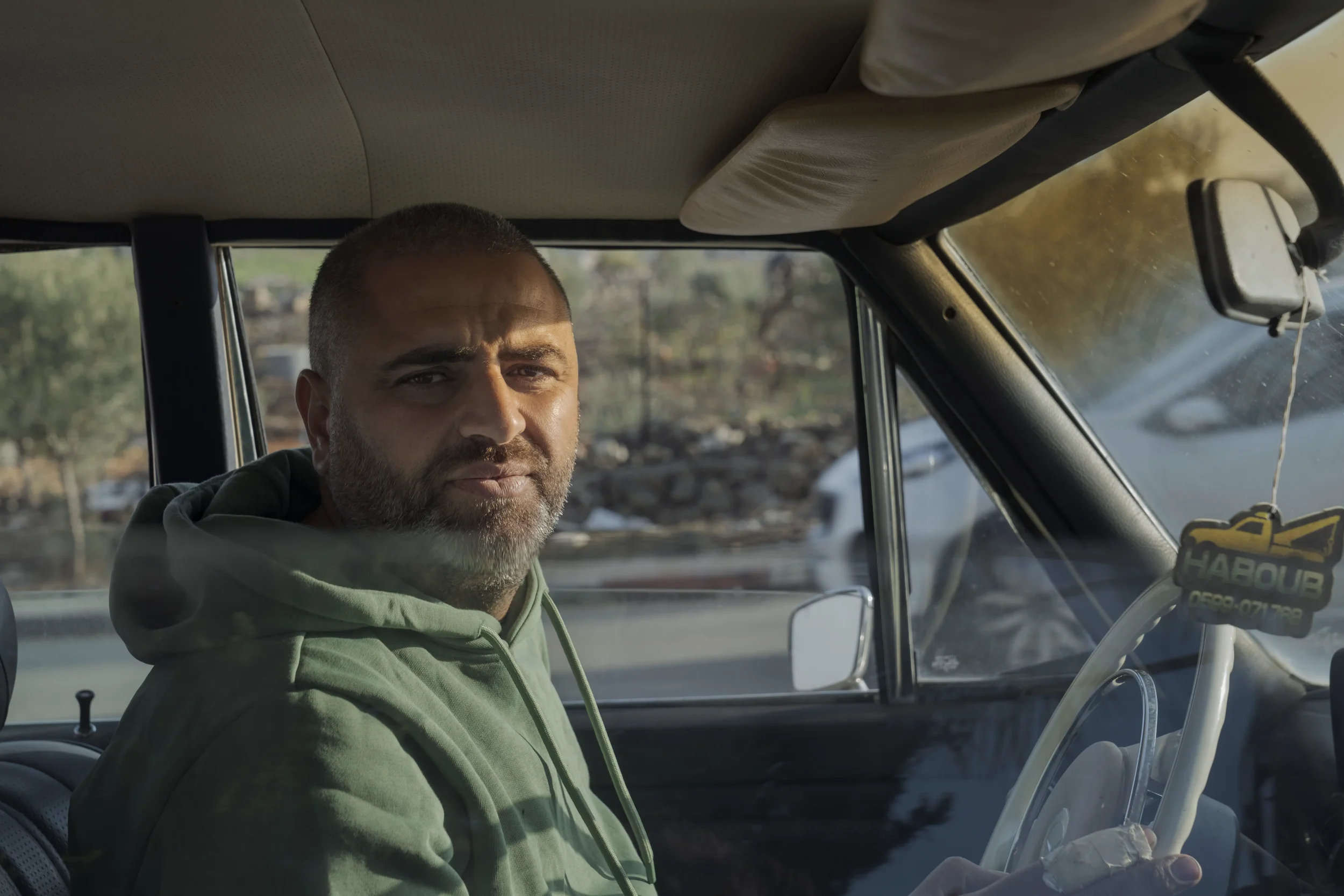
Mohamed, 40, a transport company owner, appears through the window of his restored 1961 Mercedes. The car recalls a time of easier travel, now replaced by gates and obligatory detours. Ramallah - November 2025
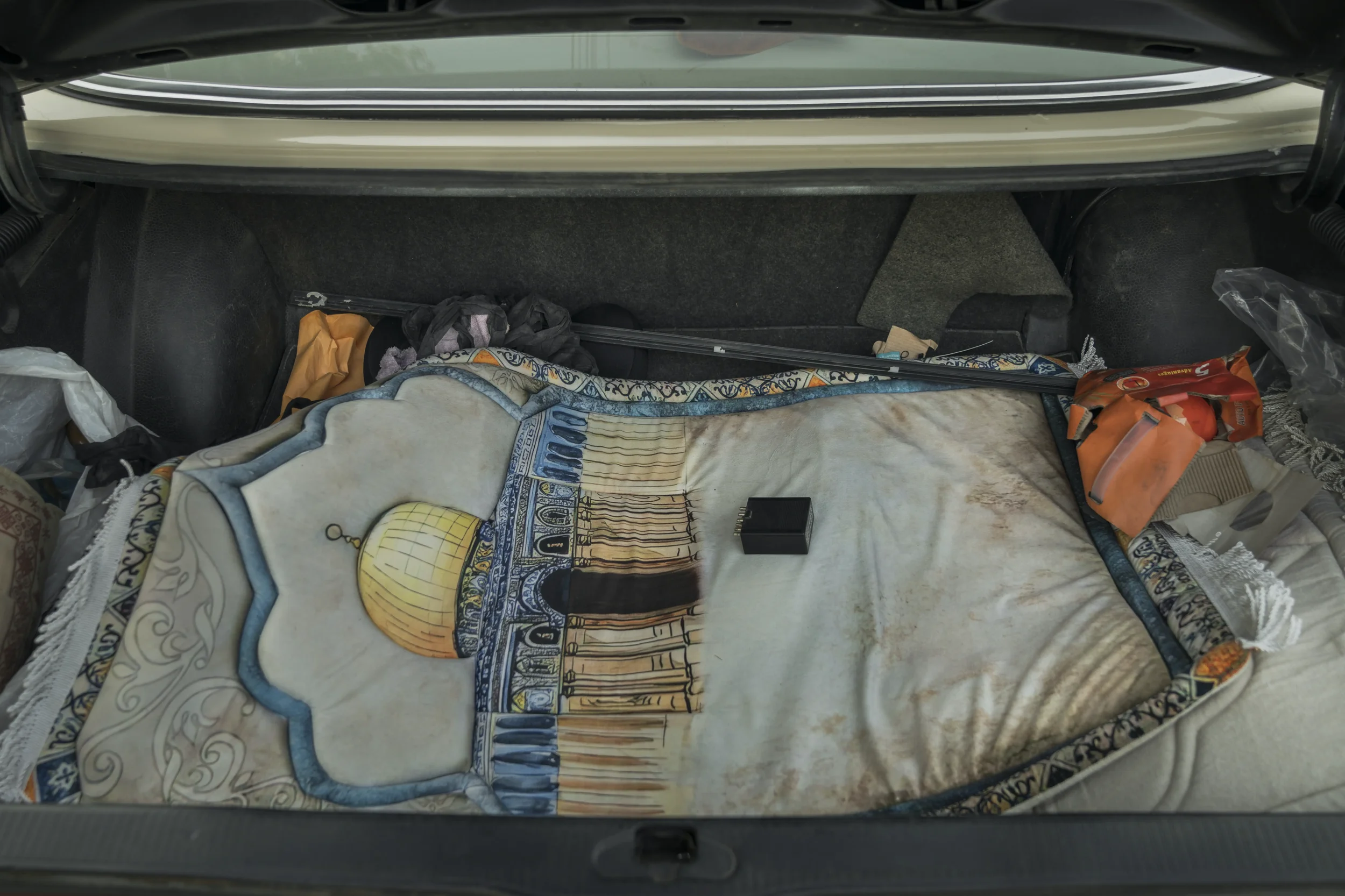
In the trunk, a prayer mat depicting the Dome of the Rock — a place many can no longer reach due to rare permits and unpredictable closures. Ramallah - November 2025
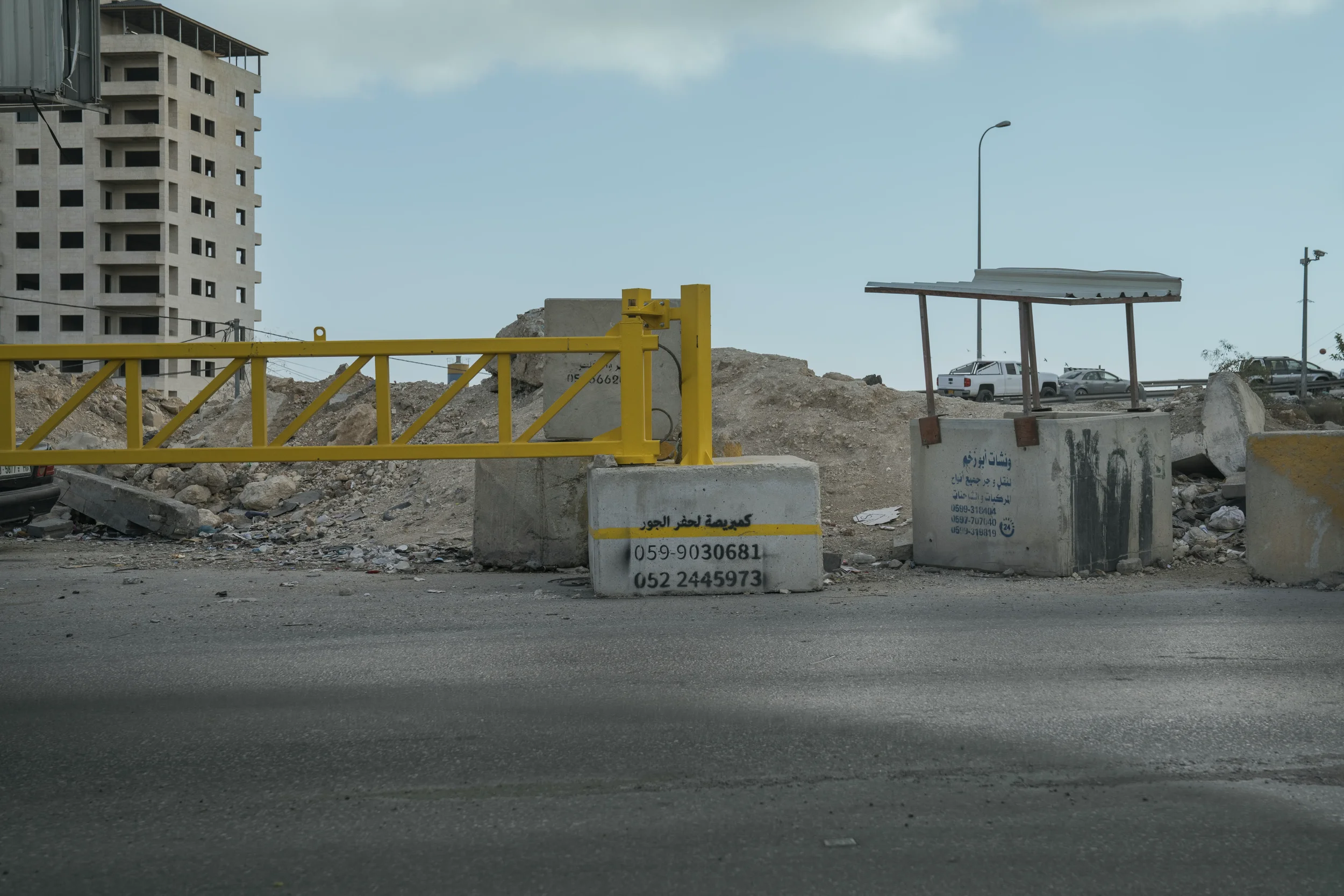
A gate closes the main road between Bethlehem and Hebron, forcing residents onto long detours and secondary roads. A routine journey becomes an uncertain path. West Bank - December 2025
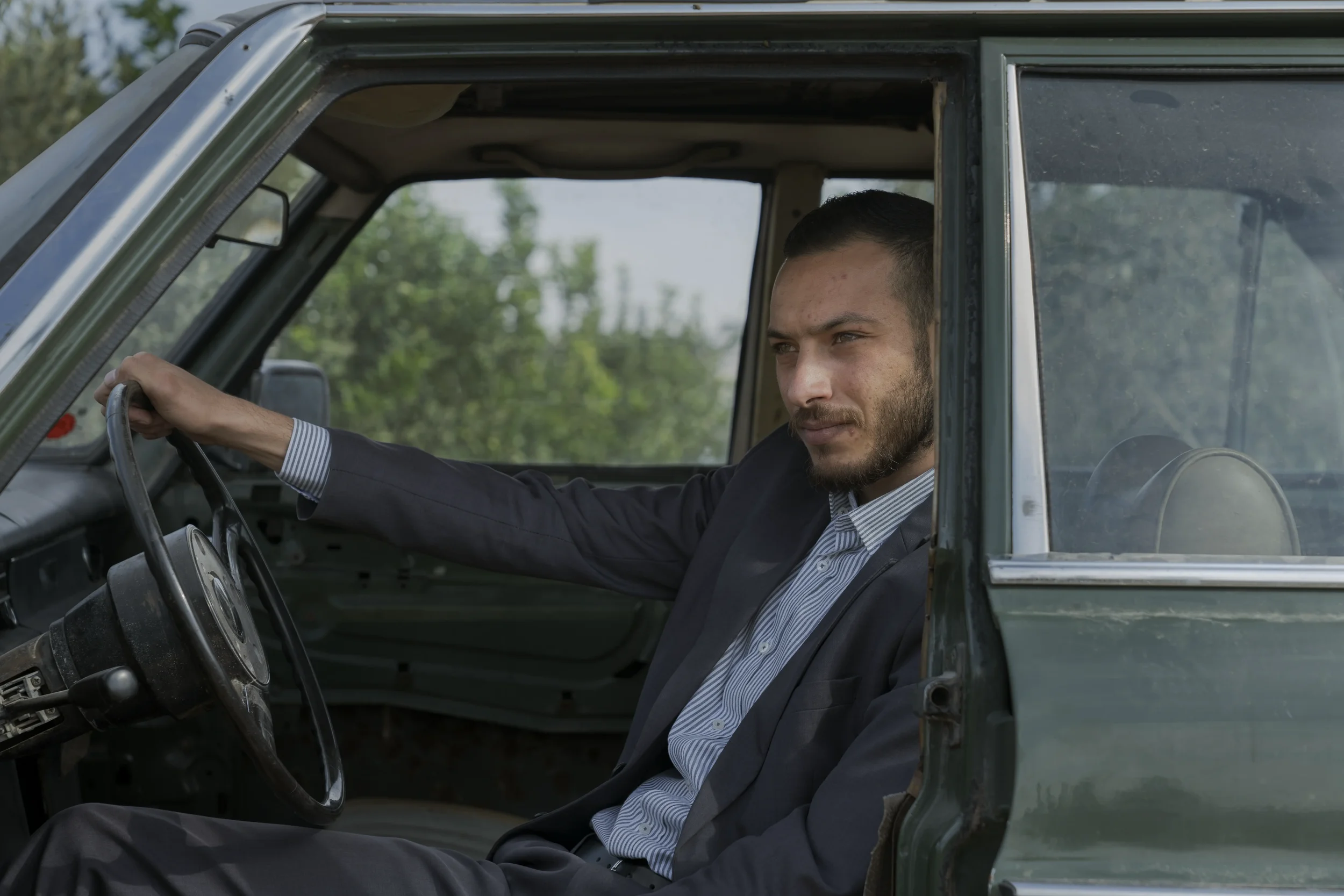
Qassam, 24, a lawyer, sits inside his Mercedes inherited from his grandfather, who worked for decades as a border taxi driver between Jordan and Lebanon. The main road to his village is now reserved for settlers, forcing him to take long detours and endure unpredictable closures. Beit Furik - December 2025
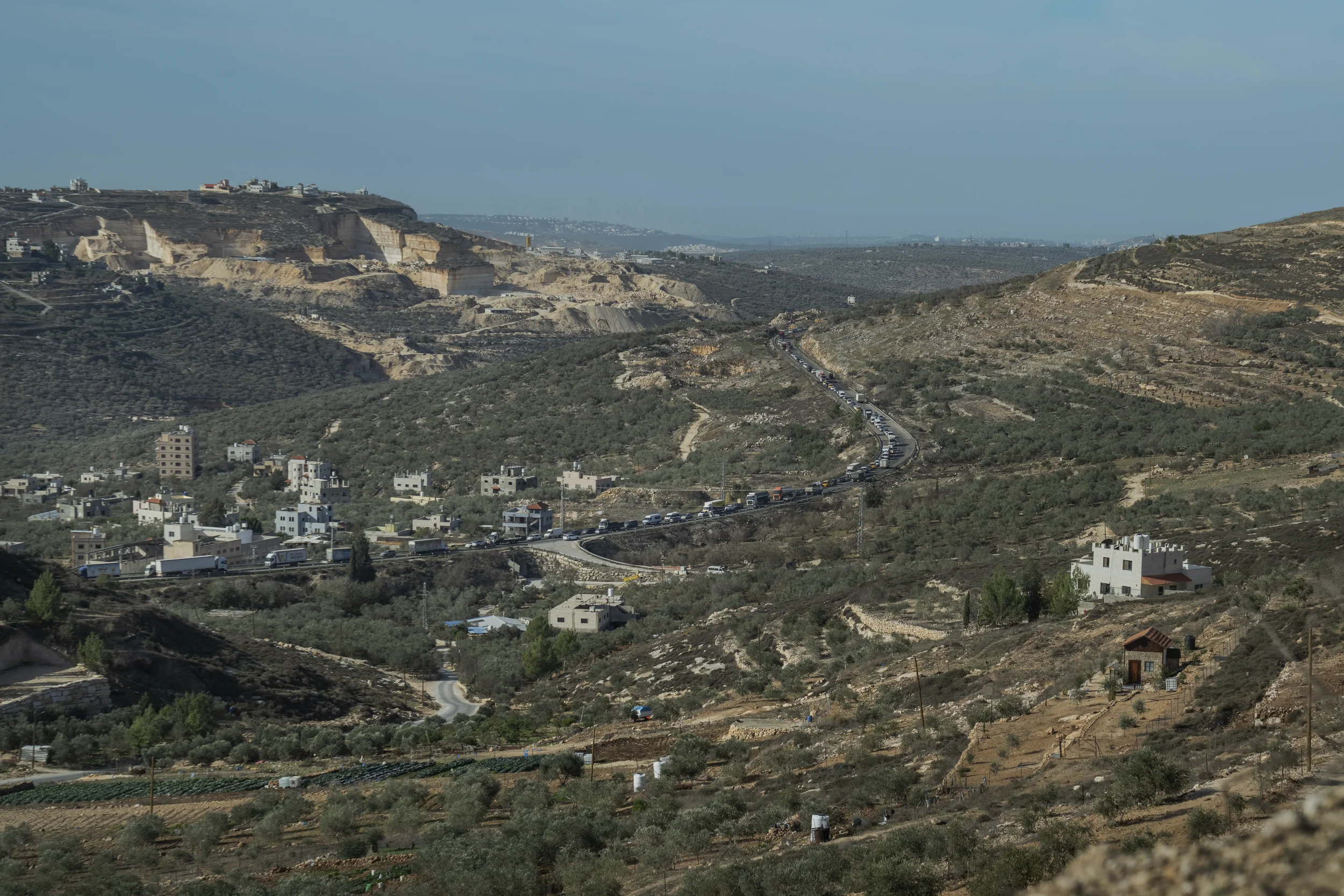
The road between Ramallah and Nablus becomes a long, motionless line of cars heading to a checkpoint — a familiar scene where workdays, court hearings and family visits dissolve in waiting. West Bank - November 2025
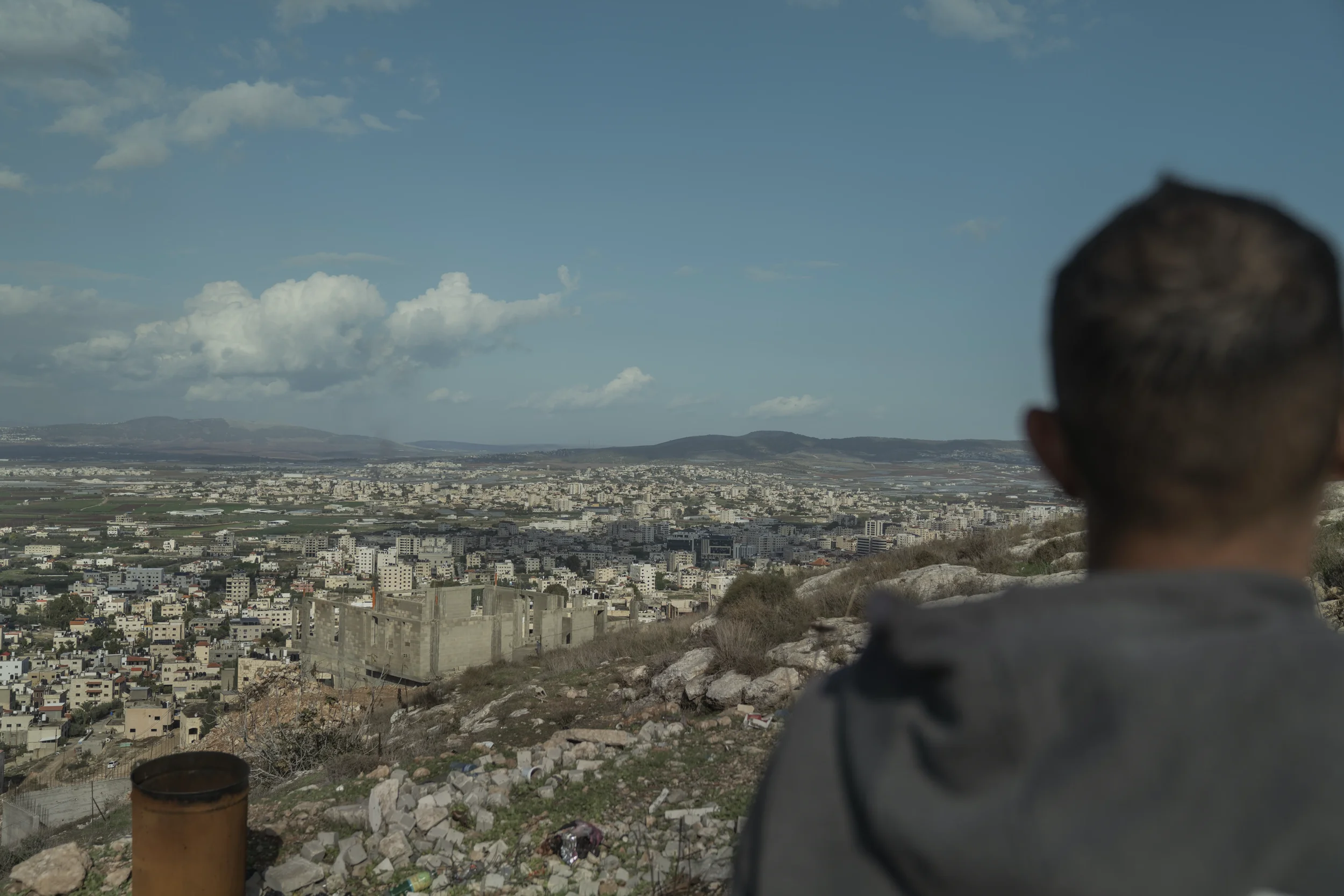
Osaid — a former taxi driver now working as a courier — looks out over the Jenin refugee camp, in a city where raids and military operations have become daily events. Jenin - November 2025
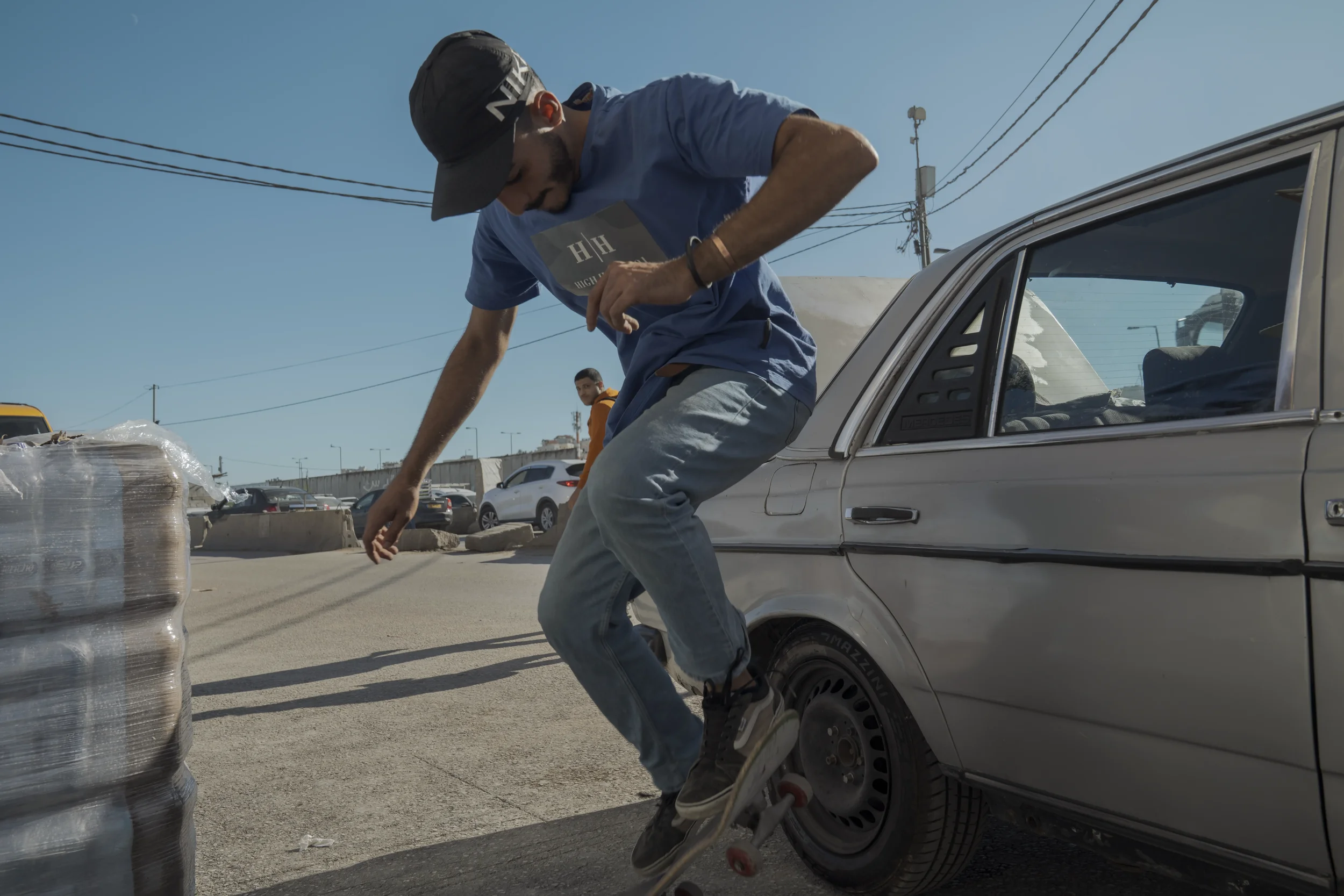
Khamis practices skateboard tricks while waiting for traffic to move. It is his way of filling the time taken by checkpoints and closures. Ramallah - November 2025
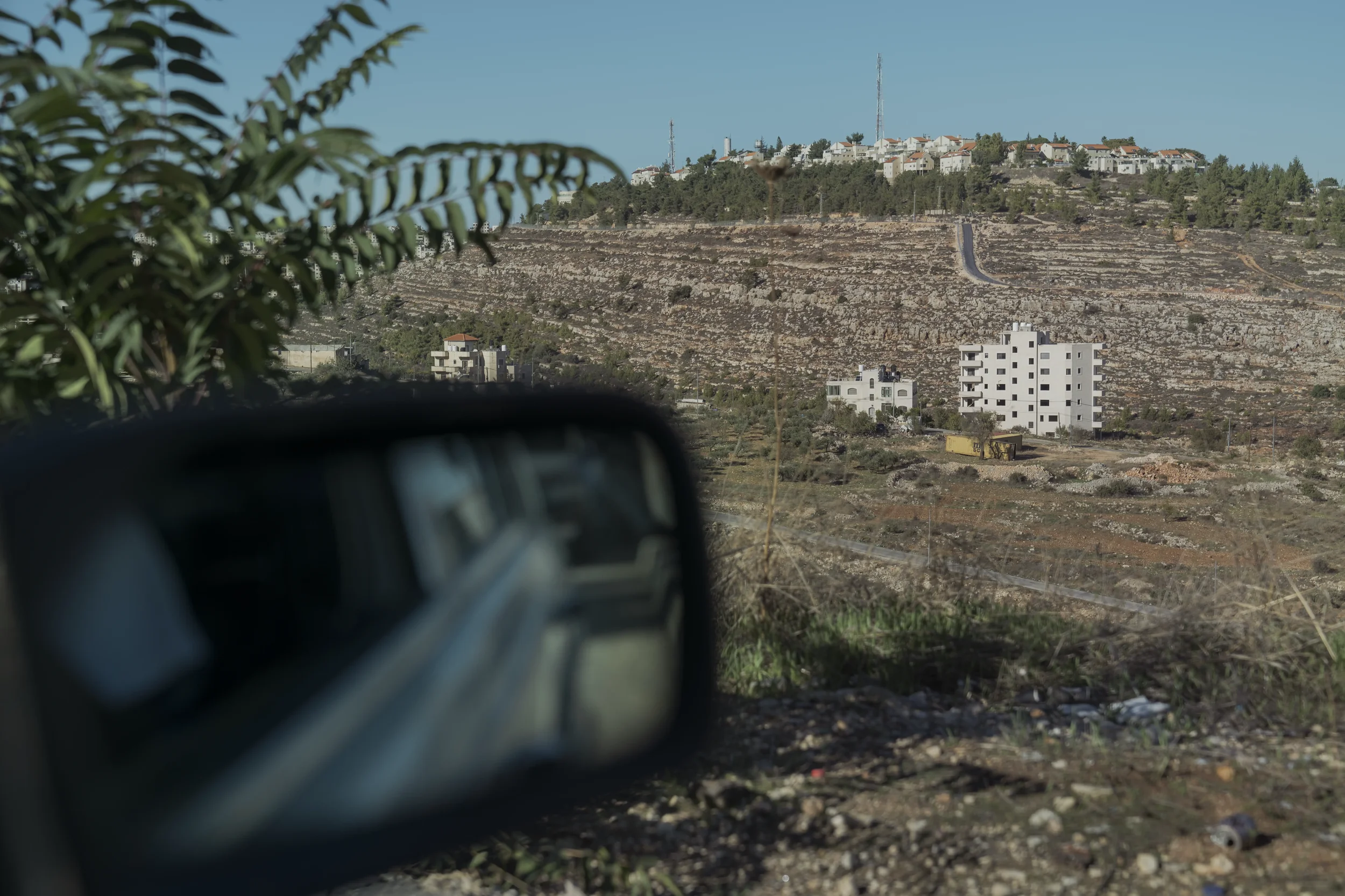
From Khaldon’s Mercedes window, the Psagot settlement rises beyond a Ramallah hill — a landscape where physical proximity contrasts with functional separation. Ramallah - November 2025
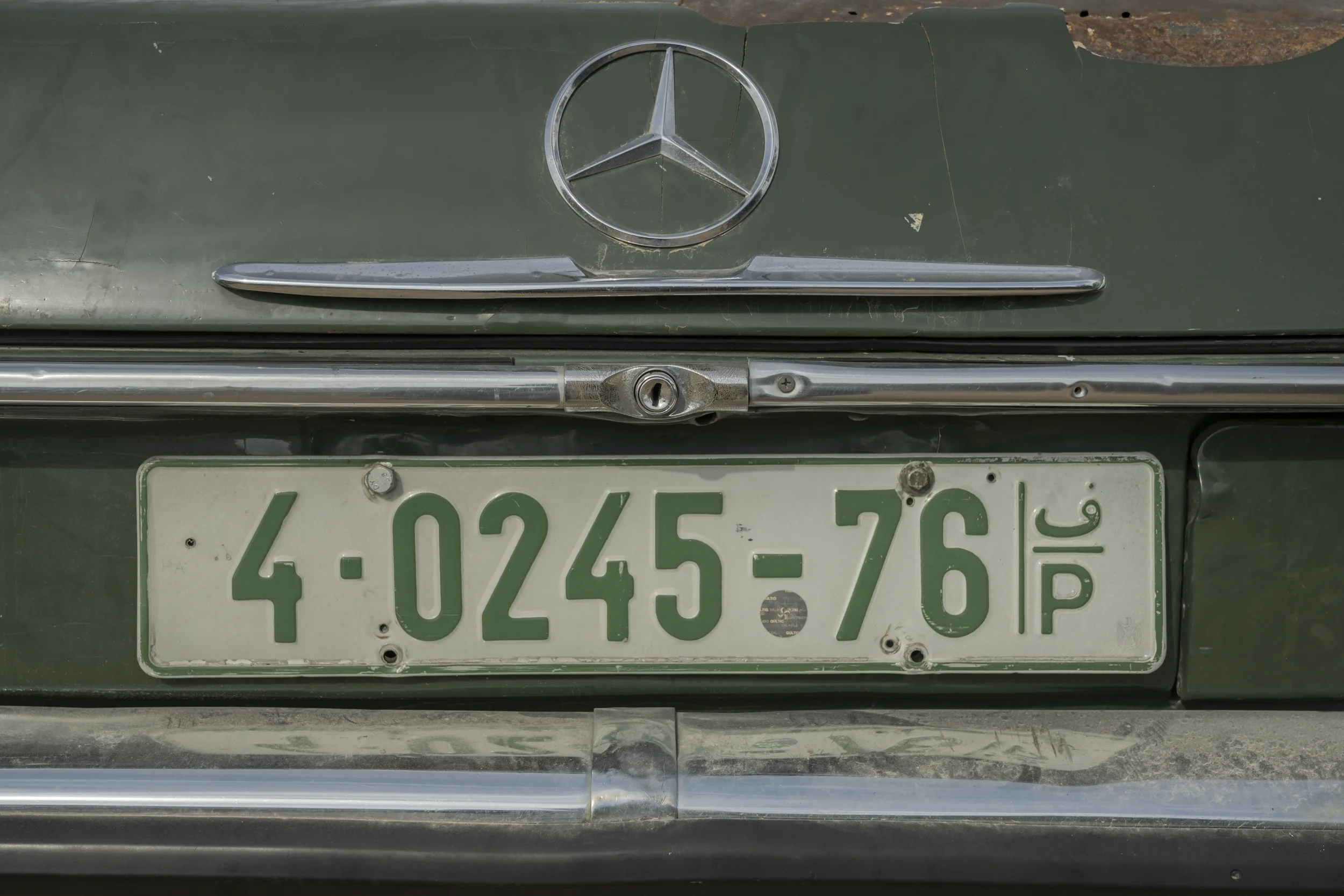
The license plate of Qassam’s car, a model inherited from his grandfather, becomes a symbol of family memory. The metal carries the traces of generations and of roads transformed over time. Nablus - December 2025